DialNext Business Communication Platform: Inside the Workspace
The DialNext business communication platform brings different business communication capabilities together in one workspace. As businesses grow, teams often need to manage customer calls, SMS conversations, WhatsApp messages, contact information, and communication activity throughout the day.
However, switching between separate tools can make this process more complicated. As a result, teams may find it harder to maintain visibility and keep customer interactions organized.
To address this challenge, DialNext provides a centralized workspace for calling, messaging, call activity, analytics, contacts, and AI-powered voice capabilities.
In this article, we’ll explore how the DialNext business communication platform supports different aspects of everyday business communication and how its modules work together.
1. Exploring the DialNext Business Communication Platform
The DialNext dashboard provides access to different communication modules from one interface. This makes it easier for users to navigate between their available tools.
For example, users can access modules such as:
- Dialer
- Call Logs
- Messages
- Group Texts
- Analytics
- Contacts
- Voice Agents
- Campaigns
Each module serves a different purpose within the broader communication workflow. While some modules support direct customer interactions, others help teams review communication activity and manage their operations.
Consequently, businesses can access multiple communication capabilities without constantly switching between separate applications.
2. Business Calling Features in the DialNext Platform
Phone calls remain an important part of customer communication, particularly for sales, support, and customer-facing teams.
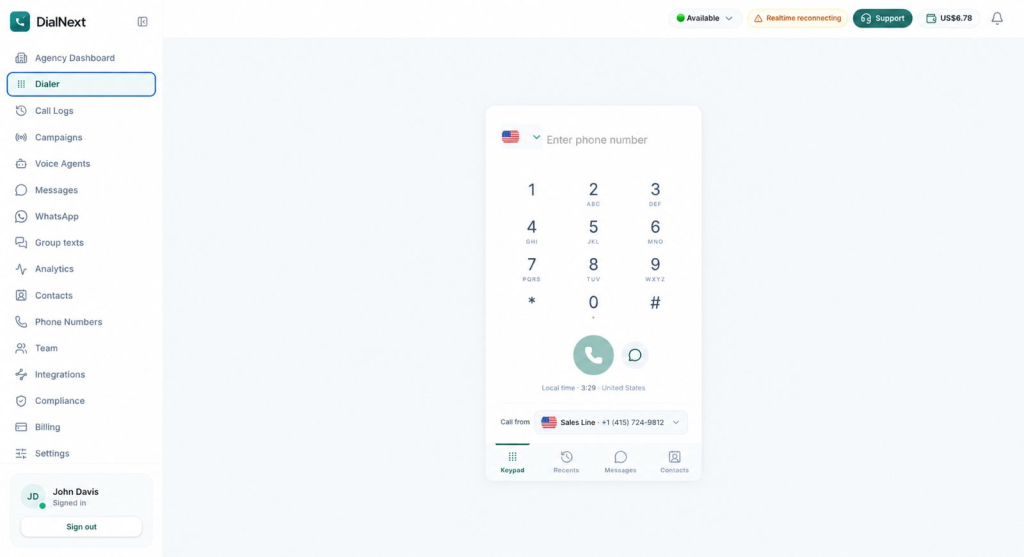
To support these interactions, DialNext provides a dedicated Dialer interface. Users can enter a phone number, select a country code, choose an available calling number, and initiate a call.
Additionally, the interface provides access to different sections, including Keypad, Recents, Messages, and Contacts.
This means users can access several calling-related functions from the same interface. For example, they can use the keypad to enter a number or access the available sections to continue their communication activities.
3. Managing Call Activity Through DialNext
Making calls is only one part of business communication. Equally important, teams need visibility into their previous calling activity.
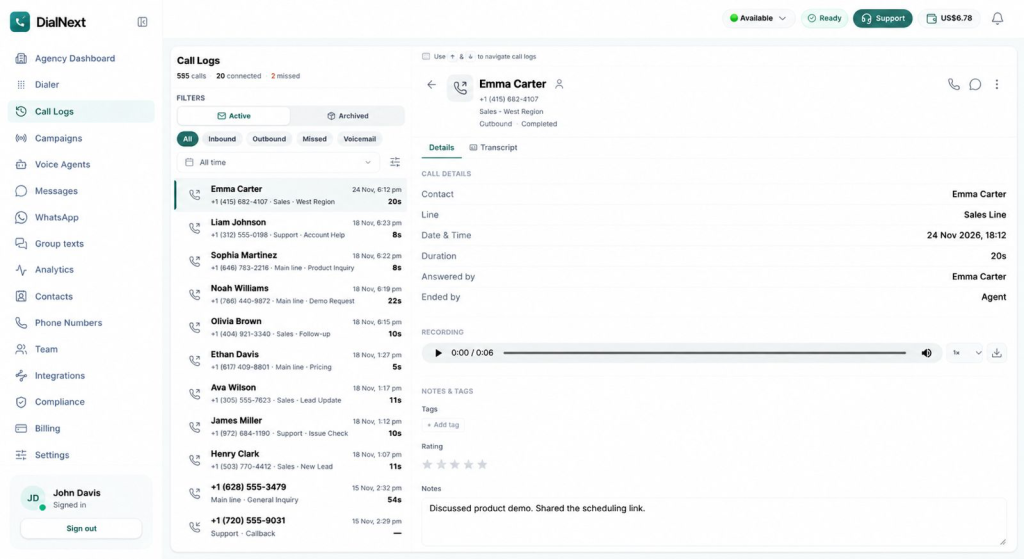
For this purpose, DialNext provides a dedicated Call Logs section where users can access their calling records.
These records help businesses review previous interactions and maintain visibility into their communication history. For example, teams may need to revisit customer interactions, review missed calls, or understand their previous calling activity.
Furthermore, having access to call records can make it easier for teams to refer to earlier communication when handling ongoing customer interactions.
4. SMS Messaging in the DialNext Business Communication Platform
Apart from phone calls, text messaging provides businesses with another way to communicate with customers.
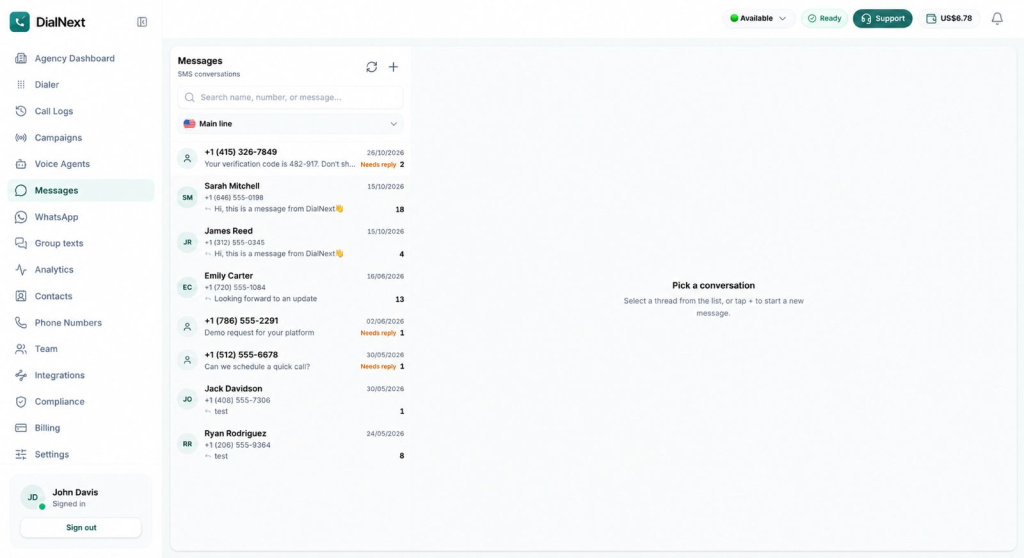
Through the Messages module, DialNext supports business SMS communication. Consequently, teams can use messaging as part of their customer communication workflows, including follow-ups and ongoing conversations.
For instance, businesses may use SMS when customers need written information or when sending a message is more appropriate than making another call.
Moreover, having messaging available within the DialNext workspace gives teams access to another communication channel alongside their calling activities.
Businesses interested in understanding messaging technology can also explore Twilio’s Programmable Messaging documentation.
5. WhatsApp Communication Through DialNext
Customers may prefer different communication channels depending on their needs and preferences. Therefore, offering more than one communication channel can be useful for businesses.
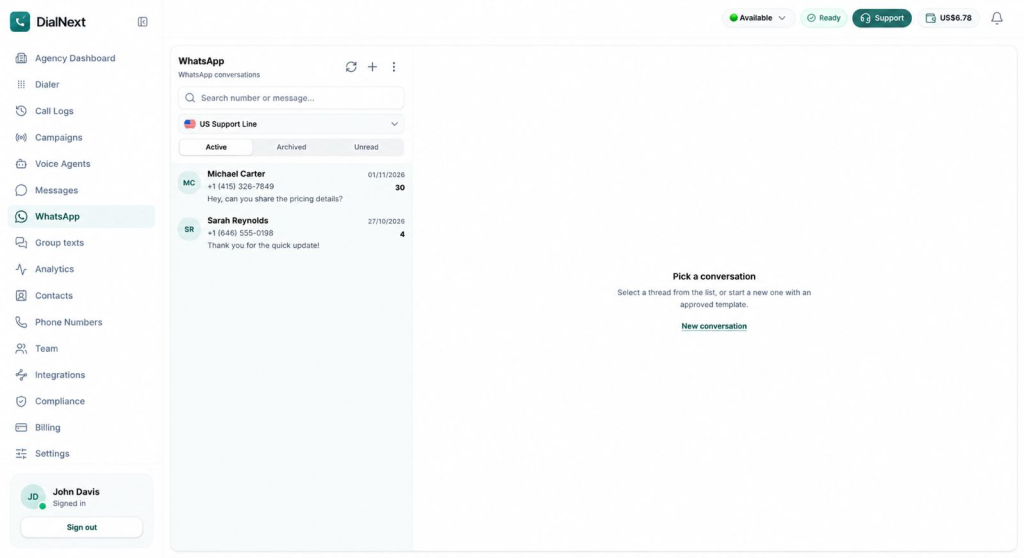
DialNext supports both inbound and outbound WhatsApp communication. This allows businesses to use WhatsApp as another channel for customer interactions.
For example, teams can use WhatsApp to communicate with customers through a familiar messaging platform. Meanwhile, they can access their other business communication capabilities within DialNext.
In this way, WhatsApp becomes part of the broader communication environment, alongside business calls and SMS.
For additional information, businesses can refer to the official WhatsApp Business Platform documentation by Meta.
6. Communication Analytics in the DialNext Business Communication Platform
As businesses handle more customer interactions, understanding communication activity becomes increasingly important.
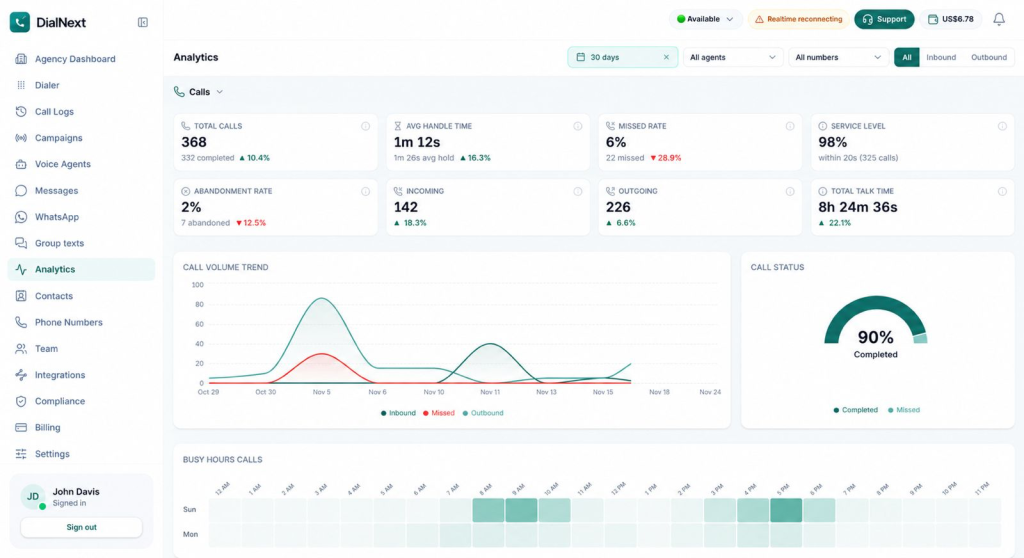
To support this, DialNext includes an Analytics module that provides access to communication-related insights.
For example, teams can use the available analytics reports and metrics to review calling activity and understand different aspects of their communication performance.
Additionally, having communication information available through an analytics interface can support regular operational reviews.
As a result, businesses can use available reporting information to better understand their communication operations and identify areas that may require attention.
7. AI Voice Agents in the DialNext Business Communication Platform
Alongside traditional business communication, AI-powered capabilities are becoming an important part of modern business operations.
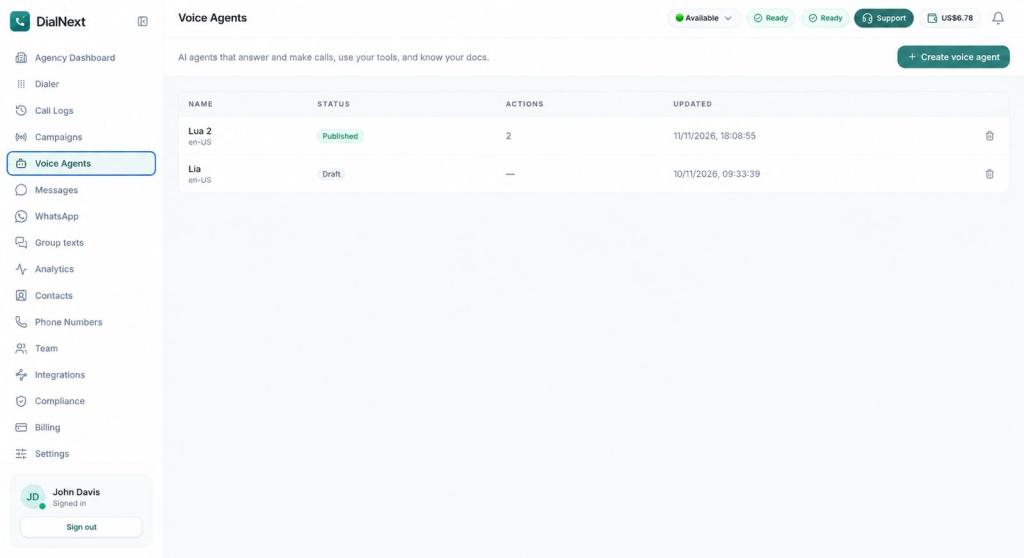
DialNext provides AI Voice Agents that businesses can use to support automated voice interactions.
In addition to communication handled by human teams, Voice Agents introduce an AI-powered capability within the DialNext workspace.
This gives businesses another option to explore when considering how to manage customer conversations and support their communication workflows.
Furthermore, bringing AI Voice Agents into the same platform allows businesses to explore AI-powered communication alongside their other available tools.
8. Managing Customer Information Within DialNext
Customer information also plays an important role in everyday business communication. After all, teams need access to relevant contact information while managing customer interactions.
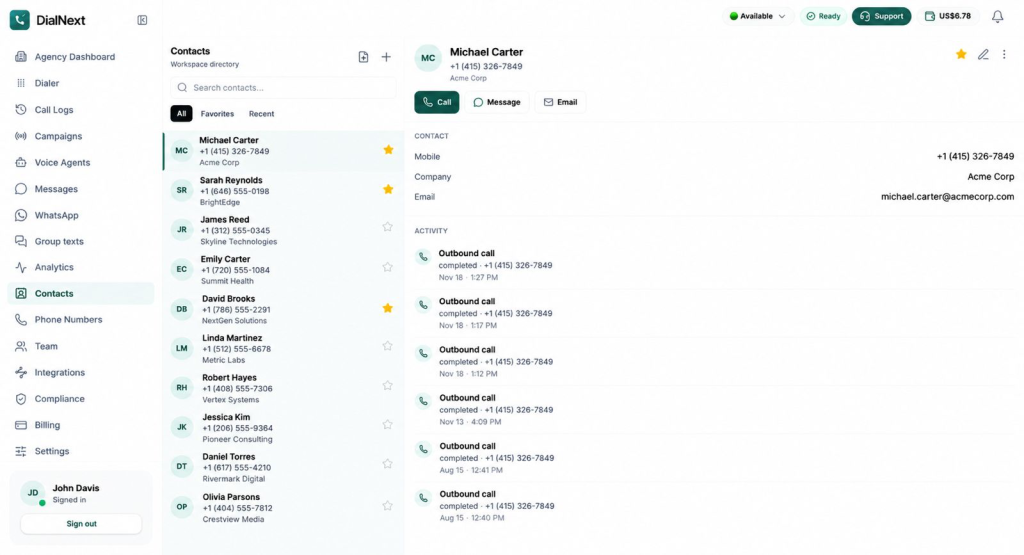
Within DialNext, the Contacts module provides a dedicated area for accessing contact information.
As a result, users have a central place to access the contact-related functionality available in their workspace.
Additionally, keeping contact information accessible alongside calling and messaging capabilities can support everyday customer communication activities.
How the DialNext Business Communication Platform Connects Different Channels
Business communication rarely happens through just one channel. For example, a customer may call a business, receive an SMS follow-up, or continue the conversation through WhatsApp.
This is where having multiple communication capabilities within one workspace becomes useful.
The DialNext business communication platform brings several capabilities together, including:
- Business calling
- SMS messaging
- WhatsApp communication
- Call activity records
- Analytics
- Contact management
- AI Voice Agents
Each capability supports a different part of the broader communication process. Together, they give businesses access to a centralized environment for handling different communication needs.
Instead of treating every interaction as an isolated activity, teams can use the available DialNext modules as part of their wider customer communication operations.
Conclusion
Managing business communication requires more than simply making and receiving calls. Businesses also need ways to communicate through different channels, review calling activity, access customer information, and explore automation.
Fortunately, the DialNext business communication platform brings these capabilities together through a centralized workspace.
By using its calling, messaging, analytics, contact management, and AI Voice Agent capabilities, businesses can manage different aspects of their communication operations from one platform.
Ultimately, this provides teams with a shared environment for accessing the communication tools they need throughout their daily operations.
Bring Your Business Communication Together with DialNext
Looking for a simpler way to manage business calls, SMS, WhatsApp conversations, and customer interactions?
DialNext brings business communication tools together in one workspace, helping teams access calling, messaging, analytics, contact management, and AI Voice Agents through a centralized platform.
Explore DialNext to discover how its communication capabilities can support your team’s daily operations and customer engagement.
Get started with DialNext and bring your business communication workflows together.